Your shoulder is the most flexible joint in your body, able to perform many different types of movement. Unfortunately this also means it is the joint most prone to dislocation.
Dislocation occurs when the ball at the top of your upper arm bone is wrenched out of the shoulder socket, either as the result of a heavy blow to the shoulder or extreme twisting of the shoulder joint. Certain types of sport are commonly associated with shoulder dislocations, including contact sports like hockey and rugby, or sports with a high risk of falls such as skiing and gymnastics. You may also dislocate your shoulder as the result of a vehicle collision or fall where you land heavily on your arm.
What causes recurrent shoulder dislocations?
When you dislocate your shoulder, the ligaments, tendons and muscles around the joint can loosen or tear and the bones may become damaged. This can increase the likelihood of another dislocation occurring because the soft tissues that once held the ball firmly inside the socket have become weakened and less effective and the bones may have lost their shape.
The most common type of soft tissue tear is called a Bankart lesion, which causes instability or weakness in the shoulder. If you damage the rim of the shoulder socket it is called a Bony Bankart lesion. Sometimes repeated dislocations can erode the back of the humeral head (the ball that goes into the shoulder socket). This type of injury is called a Hill-Sachs lesion.
Any one of these injuries can increase the chances of further shoulder dislocations. Some people are born with looser ligaments in their shoulder joint (referred to as hyperlaxity) so they are at particular risk of shoulder dislocation.
Symptoms of recurrent shoulder dislocations
If you experience recurrent shoulder dislocations, we refer to this as chronic shoulder instability.
Alongside the obvious symptom – repeated dislocations – you may also develop a feeling of looseness or weakness in the affected shoulder.
 Diagnosis of recurrent shoulder dislocations
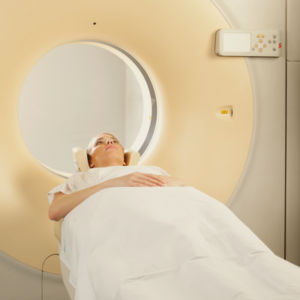
You will normally undergo a range of diagnostic imaging tests which will show what is going on inside your shoulder joint. X-rays and CT scans reveal bone damage, while MRI scans show up injuries to the ligaments and tendons.
Both CT and MRI scans might be used with dye injected into the shoulder to show any damage more clearly.
If diagnostic testing shows you have sustained significant bone damage, or if you have already undergone a Bankart labral repair (to treat a Bankart lesion or Hill-Sachs lesion) that has not resolved the problem, you may need to undergo a Latarjet procedure.
Latarjet is highly effective in treating certain types of recurrent dislocations.
How the Latarjet procedure works
The Latarjet procedure is used to treat shoulder instability caused by bone loss in the front part of the joint or a fractured glenoid (shoulder socket). The procedure is used to increase the amount of bone in the glenoid so it can hold the head of the upper arm more securely within the shoulder socket. The surgeon will move a part of the shoulder blade called the coracoid from its usual position to the front of the shoulder socket and fix it in place with screws. This restores lost or damaged bone to the glenoid, while the muscles attached to the coracoid help to support the front of the shoulder joint.
What to expect
If you have significant bone loss in your shoulder socket or you have undergone a Bankart lesion repair that has not resolved the problem, your orthopaedic surgeon may recommend a Latarjet procedure. The surgeon will make an incision at the front of your shoulder and remove a small section of coracoid bone with the tendon attached. The piece of coracoid is moved to the front of the shoulder socket and screwed into place.
In most cases the operation can be done without detaching muscles, meaning you will only need to wear a sling for around two weeks after surgery for comfort. Painkillers and anti-inflammatories will help to relieve pain and swelling and you will need to do strengthening and stretching exercises as recommended by a physiotherapist. X-rays will be taken periodically to make sure the bone is healing. You will normally be permitted to return to normal activities, including most sports, within around three months.
Alternative treatments for recurrent shoulder dislocations
Your orthopaedic surgeon will advise whether you should have a Bankart repair or Latarjet procedure for recurrent shoulder dislocation. The latter is a bone graft with accompanying tendon/muscle transfer while a Bankart repair is used to repair or tighten torn or stretched tendons and reattach a torn labrum. If you have a Hill-Sachs lesion, you may need a Remplissage procedure alongside the Bankart repair. This procedure involves filling the defect in the humeral head with part of the rotator cuff.
Related Reading:
The Remplissage Procedure for Recurrent Shoulder Dislocations
If you dislocate your shoulder, you are at increased risk of it happening again. As the most flexible joint…
What To Do About Recurrent Shoulder Dislocations
Your shoulder is the most mobile joint in your body, enabling you to reach above your head, lift and rotate your arm and move it in many different directions. Unfortunately, this flexibility…
Diagnosing and Treating a Dislocated Shoulder
As the most mobile joint in the body, able to move freely in many different directions, the shoulder is particularly prone to dislocation.
Orthopaedic Consultant & Surgeon | London
Thames Shoulder & Elbow are able to provide advice and support to anyone experiencing symptoms affecting the upper limbs (shoulder, upper arm, elbow, forearm and wrist).
Telephone: 020 376 15987
Email: admin@thamesshoulderandelbow.co.uk
Our Locations
Hospital of St John and St Elizabeth, St John’s Wood – Directions
BMI The Syon Clinic, Brentford – Directions
HCA Chiswick Medical Centre, Chiswick – Directions
West Middlesex University Hospital, Chelsea and Westminster Foundation Trust, Isleworth – Directions