Rheumatoid arthritis is an auto-immune condition. This is where the body’s immune system starts to attack the healthy tissues, causing pain, inflammation and deformity.
The reasons why people develop rheumatoid arthritis are unclear and, sadly, there is no cure. However early treatment with disease-modifying antirheumatic drugs (DMARDs) may help with remission of symptoms, according to clinical trials, so it is important to get a diagnosis as soon as possible.
Rheumatoid arthritis is less common than osteoarthritis, which is a condition caused by age-related wear and tear. Nevertheless, around 400,000 adults are affected by rheumatoid arthritis in the UK. It can affect people of any age although it occurs most frequently between the ages of 40 and 60 and women are twice to three times as likely to develop the disease as men. Having a relative with the condition makes you more likely to develop it.
Causes of rheumatoid arthritis
Researchers believe rheumatoid arthritis develops due to a combination of genetic and lifestyle factors, including smoking and diet. Maintaining a healthy weight helps to reduce your chances of developing the disease.
Rheumatoid arthritis of the shoulder
The condition can affect any joint in the body, but it most often begins in the smaller joints such as the feet and hands. When the condition affects the shoulder it causes pain, stiffness and swelling, normally in both shoulders. This pain can vary from a deep ache within the joints to pain that radiates up towards the neck. The shoulders may become so stiff that they are difficult to move. Other symptoms include deformity of the shoulder joints, weakness, fatigue and low-grade fever. Symptoms may vary in severity but it is important not to ignore them, even if they are mild.
Diagnosing rheumatoid arthritis of the shoulder
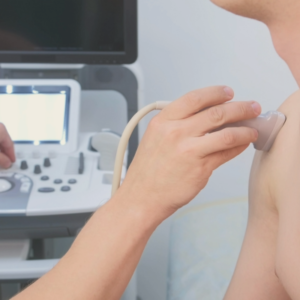 After talking to you about your symptoms and carrying out a physical examination, your doctor will send you for an X-ray to assess the bones in your shoulder and check for signs of deformity in the joint. You may be given an injection of steroids into the affected area to determine its impact on the pain.
An ultrasound or MRI scan might be used in some cases to assess the condition of your joint.
Blood tests can also be used to determine whether or not you have rheumatoid arthritis. Erythrocyte sedimentation rate (ESR) tests and C-reactive protein (CRP) tests check for raised levels of inflammation in your body.
A full blood count measures the number of red blood cells in your body. This can indicate if you have anaemia, which is more common in people with rheumatoid arthritis.
Treating rheumatoid arthritis of the shoulder
Unless your arthritis is very advance, your condition will normally be initially managed by a specialist doctor called a Rheumatologist. Based on the severity of your condition and other factors, such as your age and general state of health, your doctor will work alongside you to create a treatment plan. You may be offered physiotherapy to help to reduce stiffness in your shoulders, disease-modifying antirheumatic drugs like methotrexate or injections of steroids for short-term relief from pain and inflammation. Over the last couple of decades more powerful medicines called anti-TNF have become widely used for many patients. It may be necessary to alter your diet to cut out foods that exacerbate inflammation in the body, such as saturated and trans fats.
Surgery for rheumatoid arthritis
An orthopaedic surgeon may suggest a range of surgical options. Shoulder arthroscopy (keyhole surgery) involves making a small incision and inserting a tiny camera into your joint. Using miniature surgical instruments, the surgeon will clean out the inside of the joint so it can move more freely. In severe cases of shoulder rheumatoid arthritis, you may need joint replacement surgery. This involves removing the damaged part of your shoulder and replacing them with artificial implants.
Rheumatoid arthritis can cause lasting damage to your joints. The disease is unpredictable and can affect people in different ways. Staying physically active can help to reduce symptoms and benefit your overall physical and mental health.
If you are experiencing shoulder pain, it is important to get a diagnosis as early as possible. There are many possible causes and until the diagnosis is confirmed, it won’t be possible to treat the pain effectively.
Contact us for more information about the diagnosis and treatment of shoulder rheumatoid arthritis and other conditions that can cause shoulder pain.
Orthopaedic Consultant & Surgeon | London
Thames Shoulder & Elbow are able to provide advice and support to anyone experiencing symptoms affecting the upper limbs (shoulder, upper arm, elbow, forearm and wrist).
Telephone: 020 376 15987
Email: admin@thamesshoulderandelbow.co.uk
Our Locations
Hospital of St John and St Elizabeth, St John’s Wood – Directions
BMI The Syon Clinic, Brentford – Directions
HCA Chiswick Medical Centre, Chiswick – Directions
West Middlesex University Hospital, Chelsea and Westminster Foundation Trust, Isleworth – Directions